וְעַתָּ֕ה הִנֵּ֛ה צַעֲקַ֥ת בְּנֵי־יִשְׂרָאֵ֖ל בָּ֣אָה אֵלָ֑י וְגַם־רָאִ֙יתִי֙ אֶת־הַלַּ֔חַץ אֲשֶׁ֥ר מִצְרַ֖יִם לֹחֲצִ֥ים אֹתָֽם׃ וְעַתָּ֣ה לְכָ֔ה וְאֶֽשְׁלָחֲךָ֖ אֶל־פַּרְעֹ֑ה וְהוֹצֵ֛א אֶת־עַמִּ֥י בְנֵֽי־יִשְׂרָאֵ֖ל מִמִּצְרָֽיִם
Now the cry of the Israelites has reached Me; moreover, I have seen how the Egyptians oppress them. Come, therefore, I will send you to Pharaoh, and you shall free My people, the Israelites, from Egypt.”
Exodus 3:9-10
Discussion Questions
- What if these characters were queer women?
- What themes does this passage hint at that are relevant to queer women?
- How does centering queer women change the meaning of the text?
Supplementary Material
א”ר אלעזר מיום שנחרב בית המקדש ננעלו שערי תפלה שנאמר (איכה ג, ח) גם כי אזעק ואשוע שתם תפלתי ואע”פ ששערי תפלה ננעלו שערי דמעות לא ננעלו שנאמר (תהלים לט, יג) שמעה תפלתי ה’ ושועתי האזינה אל דמעתי אל תחרש
R. Elazar says: Since the day the Temple was destroyed the gates of prayer are locked, as it is stated in lament of the Temple’s destruction: “Also when I cry out, He shuts out my prayer” (Lam. 3:8). Yet, though the gates of prayer are locked , the gates of tears are not locked, as it is stated: “Hear my prayer, Lord, and give ear to my cry, keep not silence at my tears” (Ps. 39:13).
Babylonian Talmud, Bava Metzia 59a:5
כי ידעתי את מכאביו. כְּמוֹ “וַיֵּדַע אֱלֹהִים” (שמות ב’), כְּלוֹמַר כִּי שַׂמְתִּי לֵב לְהִתְבּוֹנֵן וְלָדַעַת אֶת מַכְאוֹבָיו וְלֹא הֶעֱלַמְתִּי עֵינַי לֶאֱטֹם אָזְנַי מִצַּעֲקָתָם
FOR I KNOW THEIR SORROWS — The verb has the same meaning as in (Exodus 2:25) “and God knew”, signifying as much as: for I have set my heart upon noticing and understanding their sorrows, and I have not hidden my eyes from their distress, nor have I stopped my ears against their cry.
Rashi on Exodus 3:7
My silences had not protected me. Your silence will not protect you. But for every word spoken, for every attempt I had ever made to speak those truths for which I am still seeking, I had made contact with other women while we examined the words to fit in a world in which we all believed, bridging our differences. And it was the concern and caring of all those women which gave me strength and enabled me to scrutinize the essentials of my living.
Audre Lorde, “The Transformation of Silence into Language and Action,” Sister Outsider
Commentary
Sarah Session (Winter 2018)
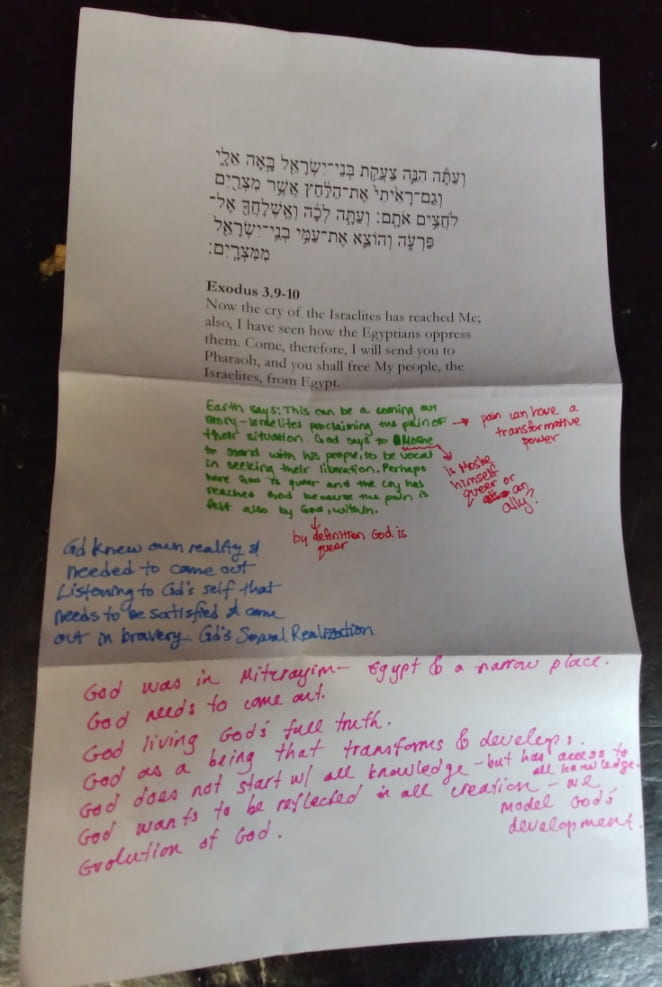
Earth
Earth says: This can be a coming out story – Israelites proclaiming the pain of their situation. God says to Moshe to stand with his people, to be vocal in seeking their liberation. Perhaps here God is queer and the cry has reached God because the pain is felt also by God, within
Fire
pain can have a transformative power
is Moshe himself queer or an ally?
by definition God is queer
Air
Gd knew own reality and needed to come out
Listening to Gd’s self that needs to be satisfied and come out in bravery
Gd’s sexual realization
Water
God was in Mitzrayim – Egypt and a narrow place
God needs to come out
God living God’s full truth
God as a being that transforms and develops
God does not start with all knowledge – but has access to all knowledge
God wants to be reflected in all creation – we model God’s development
Evolution of god
Rivka Session (Summer 2019)
Due to the prohibition of writing on Shabbat, this session was never recorded in written, audio, or video form.
 Bizarro Torah
Leave a comment