This year, I took a class with the UnYeshiva from Judaism Unbound called “Jewish Discontinuity” taught by Lex Rofeberg.
Understanding Judaism as one coherent entity, changing to some degree over time but still “continuous” from Genesis (or Mount Sinai?) till today, is an ideological and political choice, with ramifications for how Jews think about, talk about, and practice Judaism. The approach of this course is that that choice – sometimes consciously, and sometimes sub-consciously – sidelines every Jewish community of the past that didn’t “win” the debates about what Judaism should be. Most importantly, for those striving to re-invent Jewish practice for our time, it restricts the treasure-trove of resources from the Jewish past, which we could mobilize in designing Judaisms for the future.
The UnYeshiva (Past Classes), Judaism Unbound
For my final paper, I created a hidden lineage of queer women from the perspective of a queer woman from the past who was also a Torah and Talmud scholar. I deliberately adopted a specific tone and rhetoric reminiscent of traditional rabbinical commentaries, such as Rashi, Maimonides, and the Shulchan Arukh. So, if conclusions I draw seem outlandish or based on flimsy evidence, don’t get mad at me — I’m only following tradition!
CRASH! Queer Jewish Women and Continuity
In her CRASH Talk, Rabbi Benay Lappe explains what happens when a master story goes through a crash— a moment when the old answers and assumptions stop working.
For many American Jewish institutions, the master story of Jewish continuity is centered on the “Jewterus” — the Jewish uterus. This is reflected in the great effort and expense they put into trying to convince Jewish men and Jewish women to marry each other and make Jewish babies. But this is not a foregone conclusion for queer Jewish women. We disrupt this master story and the worldviews upholding it simply by existing. We are the crash.
“Only a marriage between a man and a woman is spiritually meaningful.” Crash!
“Family is Mommy and Daddy and their biological offspring.” Crash!
“A woman cannot be complete without a man.” Crash!
Because queer Jewish women challenge the master narrative of Jewish continuity, the historical response has been to overlook, ignore, or erase queer women from it. Many queer Jewish women are no longer willing to accept this. Nor are they content to abandon their role in ensuring a future for the Jewish people. However, bringing queer Jewish women into the master story of Jewish continuity demands more than simply pointing out which women in Jewish sacred stories can be read as queer. It requires taking the question of Jewish continuity seriously and seeking ways to transform our current understanding of what that means.
“The Rule” for Queer Jewish Women
In 1985, Alison Bechdel drew and penned “The Rule” for her comic strip Dykes To Watch Out For, in which one of the characters states:
“I only see a movie if it satisfies three basic requirements. One, it has to have at least two women in it who, two, talk to each other about, three, something besides a man. […] The last movie I was able to see was Alien. The two women in it talk to each other about the monster.”
Alison Bechdel, “The Rule,” Dykes To Watch Out For
From here were launched a thousand opinion pieces about the Bechdel-Wallace test. However, what most people don’t know is that “The Rule” was not a rubric for determining a film’s feminist credentials, but a tool to help queer women enjoy film by showing us possibilities for where we can exist:
If you consider that the original comic strip came out at a time when lesbian-themed films were few and far between, and queer women largely had to make do with subtext (thus the Alien reference), not only was The Bechdel Test a way for women to enjoy films, but for queer women to seek out films that were not all heterosexual-themed love fests.
INTO, “The Bechdel Test Is And Always Has Been Queer”
The Bechdel-Wallace test was initially conceived to facilitate queer readings of individual female characters in films. Simply transposing it to a different medium from a different historical and cultural context will not generate fruitful results. Even so, the Bechdel-Wallace test spurs more expansive thinking about the role of queer Jewish women in Jewish continuity. Where can we read queer Jewish women into the master story of the Jewish people? How could queer women have contributed to Jewish continuity as queer Jewish women?
In Toldot Trans: Tracing A Trans Lineage Through the Torah, Binya Koatz offers multiple examples of biblical and rabbinic characters who have “some kind of gender/sex magic going on,” defying simplistic binaries of man and woman. In a parallel vein, the three requirements for “The Rule” asserts the potential of women to find belonging, companionship, purpose, and pleasure with other women. Let this be a benchmark for identifying where queer women can be hiding in the master story of the Jewish people: any woman who seeks or enjoys the company of other women without the involvement of a man can be read as queer.
Eve: The First Queer Woman
וַיִּ֩בֶן֩ יְהֹוָ֨ה אֱלֹהִ֧ים ׀ אֶֽת־הַצֵּלָ֛ע אֲשֶׁר־לָקַ֥ח מִן־הָֽאָדָ֖ם לְאִשָּׁ֑ה וַיְבִאֶ֖הָ אֶל־הָֽאָדָֽם׃ וַיֹּ֘אמֶר֮ הָֽאָדָם֒ זֹ֣את הַפַּ֗עַם עֶ֚צֶם מֵֽעֲצָמַ֔י וּבָשָׂ֖ר מִבְּשָׂרִ֑י לְזֹאת֙ יִקָּרֵ֣א אִשָּׁ֔ה כִּ֥י מֵאִ֖ישׁ לֻֽקְחָה־זֹּֽאת׃
And God יהוה fashioned the side that had been taken from the Human into a woman, bringing her to the Human. Then the Human said, “This one at last Is bone of my bones and flesh of my flesh. This one shall be called Woman, for from a Human was she taken.”
Genesis 2:23-24
The Rabbis describe Adam as an androgynos, a being embodying the full spectrum of male and female, and possibly more. From this, we know that Adam contains within them all potential expressions of humanity, including gender. So, this passage means that when God created the first woman from the first human, They gave life to the part of Adam that already was a woman.
Being the first woman, Eve contains within her all potential expressions of womanhood. As Chaka Khan sings, “I’m Every woman, it’s all in me”, including the ability to love and desire women as a woman.
Women loving and desiring women is literally as old as Adam and Eve.
The Tribe of Dinah
וַתֵּצֵ֤א דִינָה֙ בַּת־לֵאָ֔ה אֲשֶׁ֥ר יָלְדָ֖ה לְיַעֲקֹ֑ב לִרְא֖וֹת בִּבְנ֥וֹת הָאָֽרֶץ׃
Now Dinah, the daughter whom Leah had borne to Jacob, went out to visit the daughters of the land.
Genesis 34:1
ותצא דינת בת לאה, יצאה מאהל אמה ואביה שהיה מחוץ לעיר ובאה אל העיר לראות בבנות הארץ
she [Dinah] went forth from her mother’s tent, her father also not being at home, and she came into the town to get acquainted with other girls in the town.
Radak on Genesis 34:1:1
וַיֹּאמֶר יְהוָה אֶל־אַבְרָם לֶךְ־לְךָ מֵאַרְצְךָ וּמִמּוֹלַדְתְּךָ וּמִבֵּית אָבִיךָ אֶל־הָאָרֶץ אֲשֶׁר אַרְאֶךָּ׃
יהוה said to Abram, “Go forth from your native land and from your father’s house to the land that I will show you.
Genesis 12:1
Like her great-grandfather Abraham before her, Dinah goes out of her father’s house. It is because of Abraham that we know that Dinah going out is not mere whimsy, but heeding a divine call. God is urging her to pursue the company of other women. Dinah’s love and desire for women is not an unnatural aberration or abomination, but a gift from God.
For what purpose was Dinah given this gift? To continue the legacy of her great-grandmother Sarah by teaching Torah to women, particularly women who love and desire women. Why did God appoint Dinah for this purpose? So that women who love and desire women cannot say, “Torah is only for men,” and so that they will not say, “God will not see or hear me because I am a woman who loves and desires women.”
Unlike her brothers, the Torah does not say that Dinah receives a blessing from Jacob. We know that Dinah receives a blessing on account of her affliction at the hands of Shechem, for God heard Hagar’s affliction at the hands of Sarah and increased her offspring beyond count. God also heard Dinah’s affliction and increased her offspring. Neither the Torah nor our Rabbis speak of any children born to Dinah, so who were these offspring?
According to tradition, when one born to non-Jewish parents enters the fold of the Jewish people, they are named as a son, daughter, or child of Abraham and Sarah. Why is this so? Our Rabbis teach that anyone who teaches Torah to the child of another is given credit as though they formed that student, and Abraham and Sarah brought many toward Torah. From this, we know that all the queer women whom Dinah brought to Torah are her offspring. Thus, all queer women who are brought to Torah are known as being of the Tribe of Dinah.
Miriam Rabbeinu
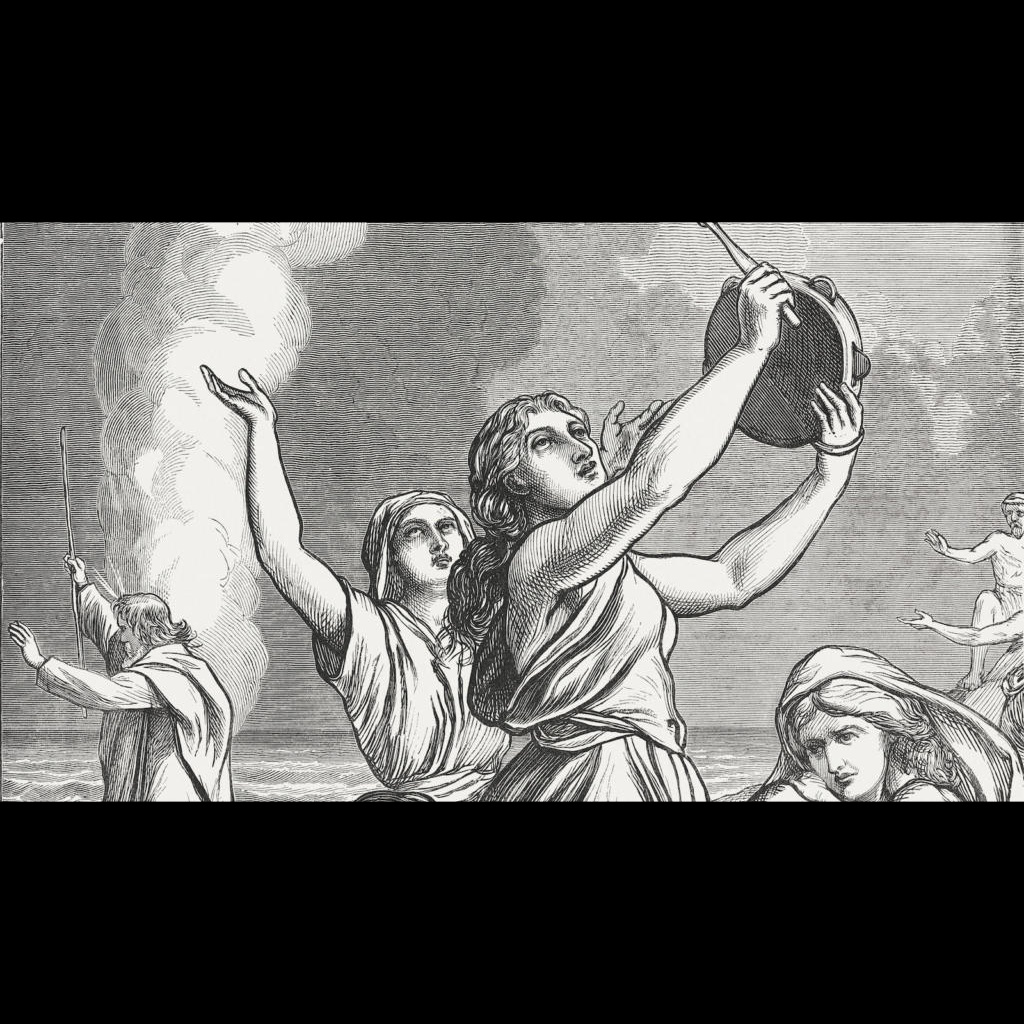
From the Torah, we learn that Miriam is born into the tribe of Levi, like her brothers Moses and Aaron. She is also a woman of the tribe of Dinah, for in three ways Miriam is like Dinah. First, the Torah names neither husband nor sons for her. Second, she enjoys the company of women without a man involved:
וַתִּקַּח֩ מִרְיָ֨ם הַנְּבִיאָ֜ה אֲח֧וֹת אַהֲרֹ֛ן אֶת־הַתֹּ֖ף בְּיָדָ֑הּ וַתֵּצֶ֤אןָ כׇֽל־הַנָּשִׁים֙ אַחֲרֶ֔יהָ בְּתֻפִּ֖ים וּבִמְחֹלֹֽת׃
Then Miriam the prophet, Aaron’s sister, picked up a hand-drum, and all the women went out after her in dance with hand-drums.
Exodus 15:20
Finally, she teaches mitzvot to the women, and through this she continues the line of Dinah. Why is this important? The Rabbis tell us that Miriam is a prophet in her own right like her brothers Moses and Aaron. Through her, we know that queer women are part of the prophetic tradition. Like many queer women in the generations that follow, she is outspoken in asserting her equality with her peers, even if that means speaking out against Moses himself! (God punishes her for this when she goes too far and speaks ill of Moses’ wife.) What is the Torah teaching us through her?
Our Sages teach that Miriam plays a vital role in sustaining the Isrealites as they wandered the wilderness. Through her merit, there is always a well of water with them while she lives. When Miriam dies, the well dries up. What is the meaning of this water? Water is the flow and substance of life. While Miriam lives, the water flows freely, nourishing life, making it vibrant and colorful. With Miriam’s love and desire for women, Torah can dance and sing in the bodies and voices of all women. After she dies, the liveliness of life goes with her.
What Do We Learn From This?
Queer women are an integral part of the master story of Jewish continuity. Starting with Eve, we’ve been present since the origins of humanity. Then, continuing with Dinah, the love and desire queer women feel for women is revealed as a divine gift that connects queer women to each other across generations. Finally, in Miriam, queer Jewish women are embedded into the prophetic tradition, and we become inheritors of a unique power to enrich and enliven Jewish tradition. If we are hidden or erased, it is bereft, parched, and dry for those of us pushed to the margins. When we are accepted and honored, Jewish tradition becomes a source of joy, peace, strength, meaning, connection, and belonging for all of us.



Leave a Reply